
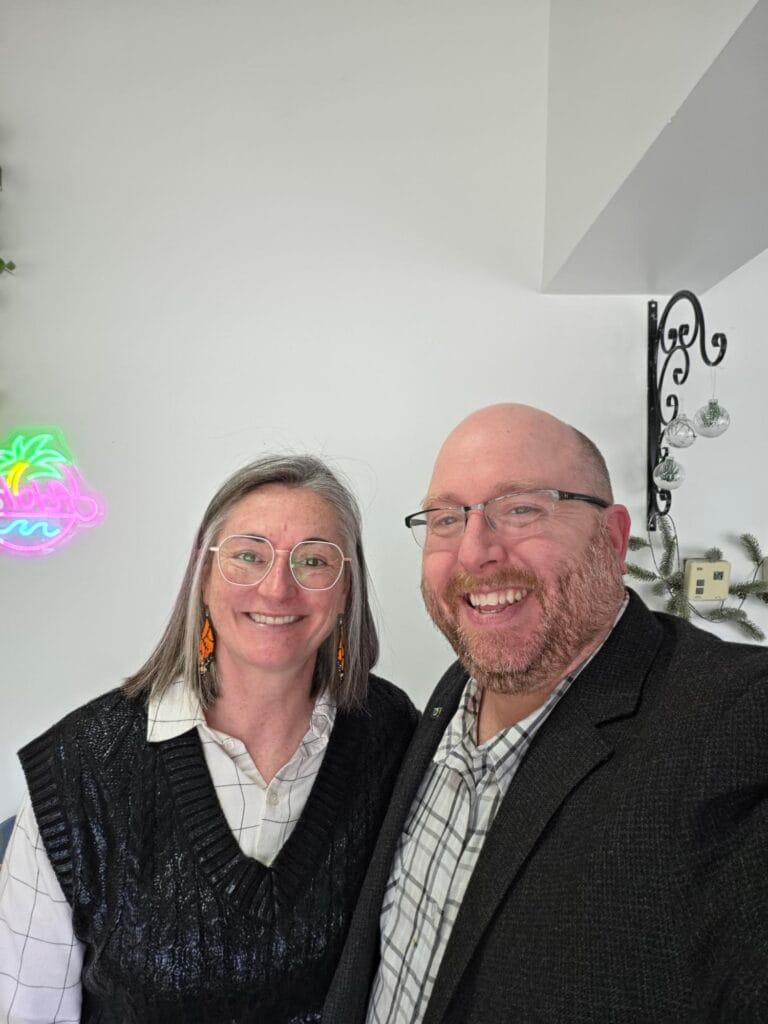
In late April, Dan travelled to Winnipeg, a city home to 114 co-operative headquarters. While there on business, he took the opportunity to connect with a number of stakeholders, including Marie-Cécile Alvarez, Community Economic Development Director at the Economic Development Council for Manitoba Bilingual Municipalities (CDEM).
CDEM is a CMC member and serves as the francophone representative for Manitoba within the Network of Provincial and Territorial Associations, a group convened by CMC to share best practices and foster collaboration. Established in 1996 and primarily serving 15 bilingual communities, CDEM is a strategic partner to governments and plays a key role in supporting the francophonie. Its work spans employability and immigration, business services, community economic development, tourism, youth engagement, and communications.
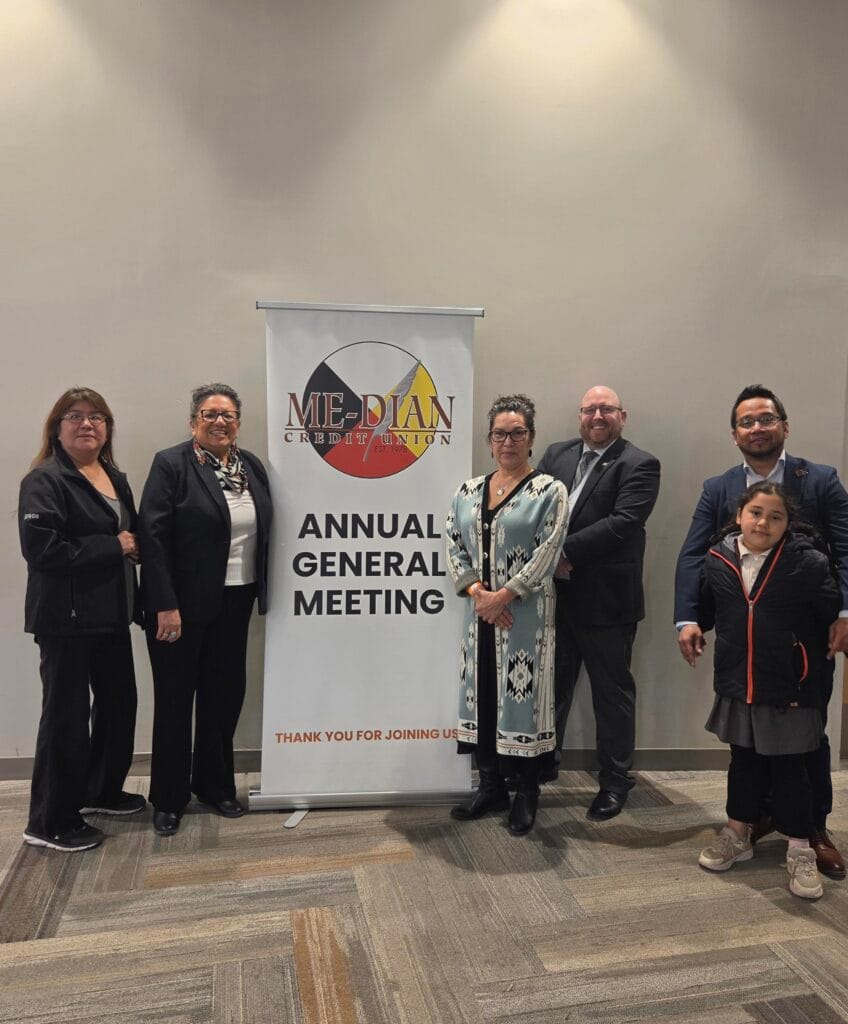
Later that day, Dan participated in the Annual General Meeting of CMC member Me-Dian Credit Union, which has been serving Indigenous communities across Manitoba since 1978, making it Canada’s first Indigenous financial institution. Originally established as the Métis Credit Union of Manitoba as a closed-bond credit union, it became Me-Dian when its bond of association was expanded to include First Nations, Inuit, and Métis communities. In the spirit of reconciliation, it opened its membership in 2009 to all Manitobans, both Indigenous and non-Indigenous.
If you are interested in discussing financial accessibility, inclusion, and economic empowerment with leaders from co-operative enterprises such as Me-Dian Credit Union, you are invited to register for the Indigenous Co-op Gathering on June 8 as part of CMC Congress 2026.
Dan is pictured here with Me-Dian leadership (and a future member) following the AGM.
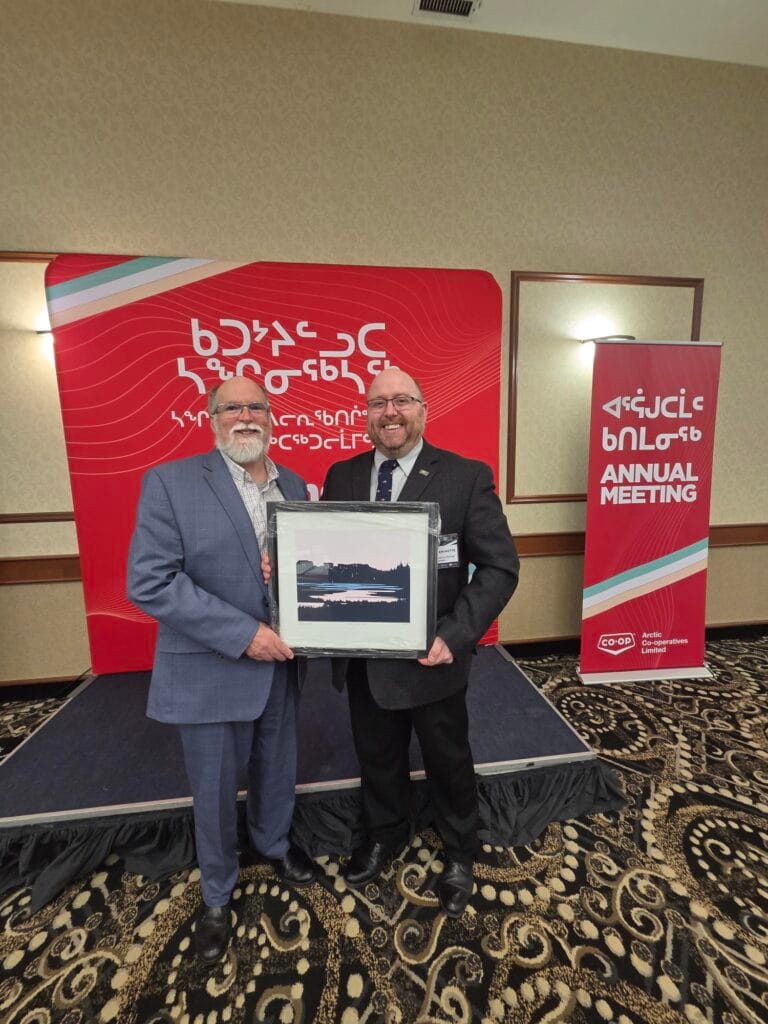
The following day, Dan attended and spoke at the Annual General Meetings of Arctic Co-operatives Limited and the Arctic Co-op Development Fund (ACDF). Established in 1986 through a joint initiative with federal and territorial governments, ACDF provides financing that is locally owned and controlled by co-operatives.
With its Home Office based in Winnipeg, Arctic Co-operatives Limited supports 32 community-based co-operatives across Northern Canada. A highlight of the meetings is always hearing Inuktitut spoken as part of the conduct of business. It was also noteworthy to learn that, in 2025, member co-operative revenue increased by 10 per cent, net savings grew by $13 million, and $17 million in patronage dividends was returned to members.
Dan is pictured here with Mark Needdhan, President of the Board and representative for the Mackenzie Region.
Not one to remain idle, Dan made the most of a window of time between the Arctic Co-operatives Limited AGM and the evening dinner by visiting several local co-operatives. His first stop was Eadha Bakery Worker Co-op, fulfilling a promise made to MacK Parman a few years earlier when the 2024 cohort of the Co-operators Young Leaders Award, of which MacK was a member, participated in CMC Congress.
Eadha is a successful worker co-operative conversion completed in 2023 and has quickly become a well-known destination for sourdough bread and pastries in Winnipeg’s West End. The co-op is also recognized for its strong commitment to a queer-affirming, anti-racist, and decolonial mandate, as well as its partnerships with community groups and organizations advancing this work.
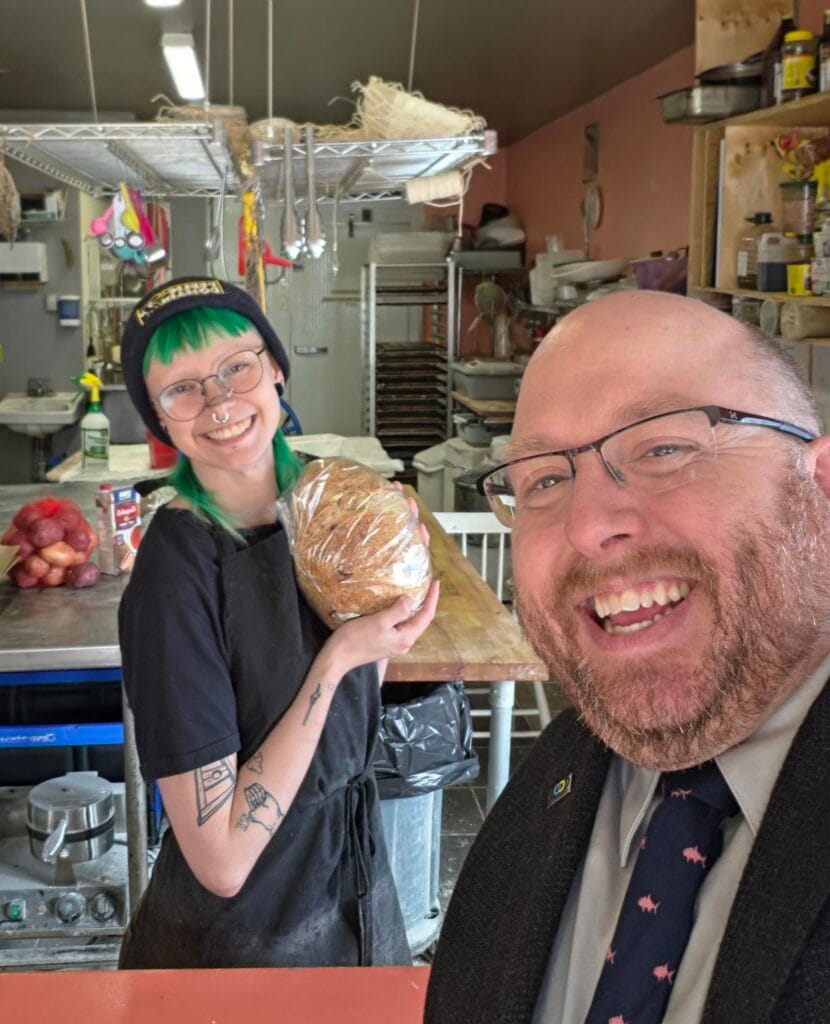
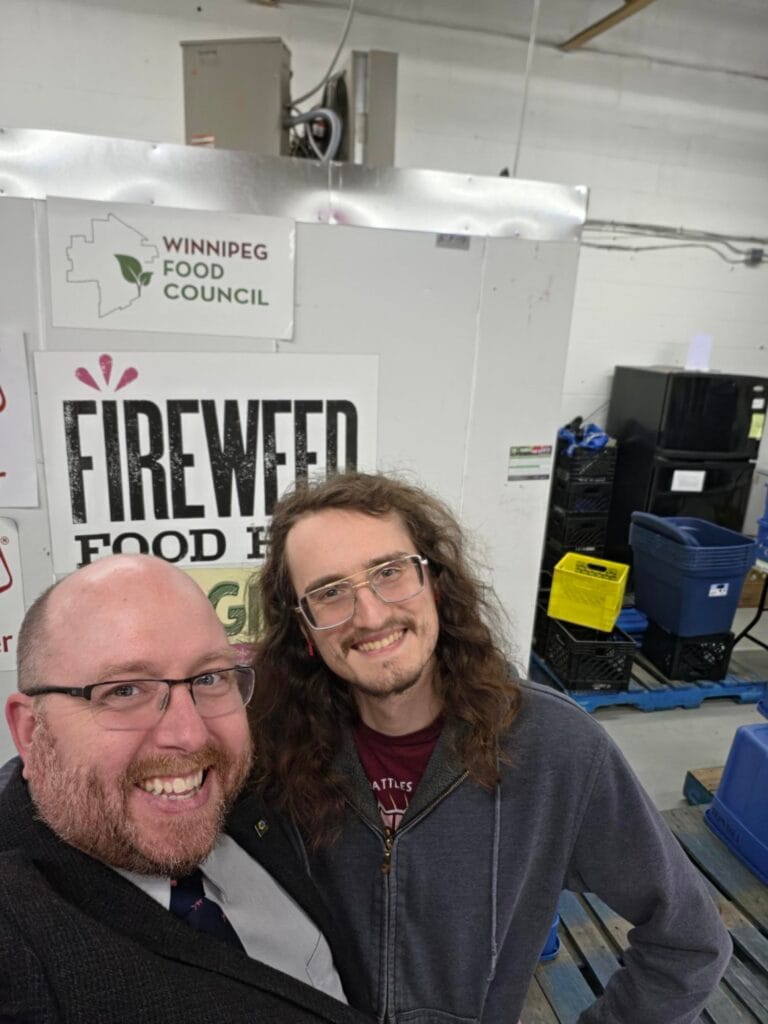
The next stop was Fireweed Food Community Service Co‑operative Inc., where Ralf Sawatzky, Fireweed’s Market Coordinator, provided a tour and shared insights into the organization’s work. Established in 2016 as a multi‑stakeholder co-operative, Fireweed was created to address challenges within Manitoba’s food system, including supporting consumers in accessing food that reduces the overall ecological footprint.
In 2020, the co-operative launched the Fireweed Food Hub to help wholesale buyers source local products while enabling small producers to expand their market reach. The Food Hub also diverts surplus food from farms and the local farmers’ market to community organizations and food-insecure households through a hamper program.
In addition, Fireweed operates a mobile market, known as the “Veggie Van,” which brings local food to underserved communities in partnership with a range of organizations. During the pandemic, Fireweed Food Co-op was a recipient of the Community Services Recovery Fund to support its transition, and it also received funding through the Investment Readiness Program.
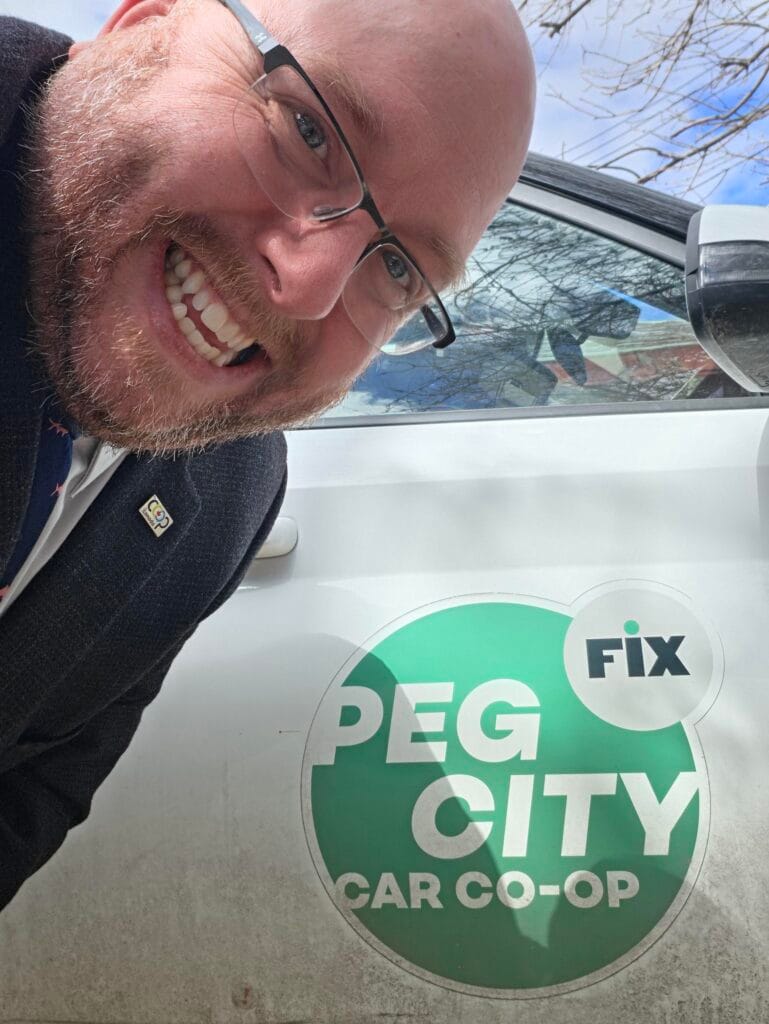
Dan could not resist following a trail of co-op logos across the city. It was a pleasure for him to learn that both Eadha Bakery Worker Co-op and Fireweed Food Co-operative rely on Peg City Car Co-op as part of their daily operations.
Peg City Car Co-op is a consumer co-operative that offers carsharing services to individuals, families, and businesses, providing access to vehicles on an as-needed basis. Incorporated in 2011, the co-operative was a recipient of the federally funded Co-operative Development Initiative (CDI), which ran from 2009 to 2013.
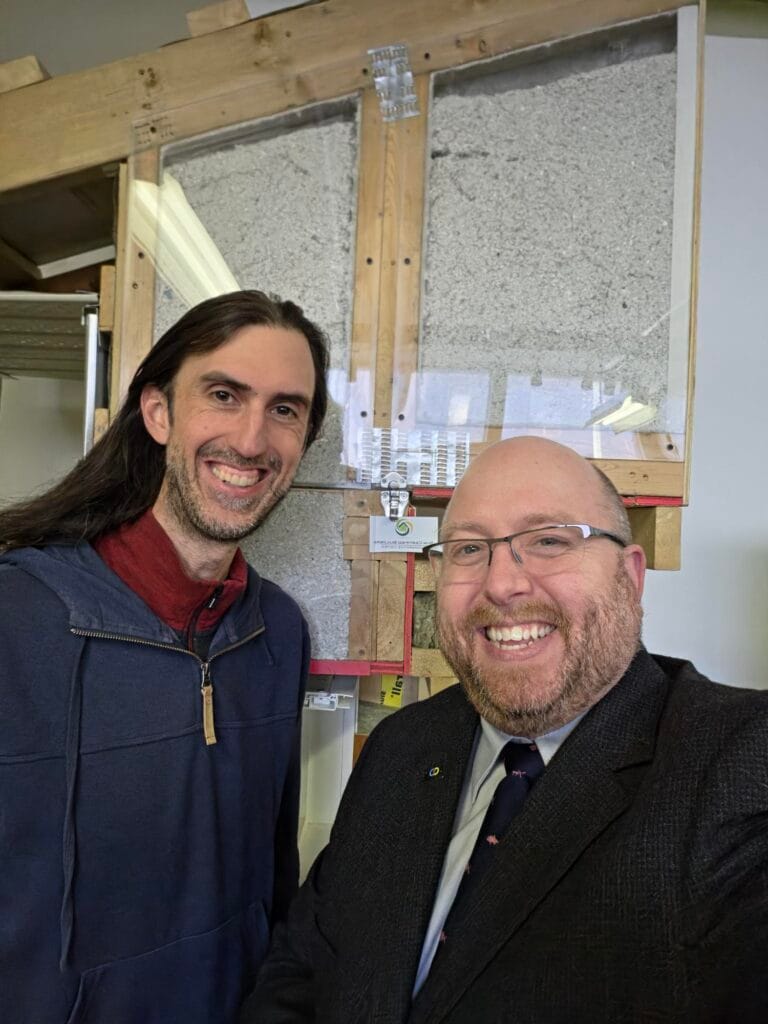
Dan then met with Eric Gosselin, a graduate of the Master of Management, Co-operatives and Credit Unions program at Saint Mary’s University and a proud Franco‑Manitoban. Eric now serves as Executive Director of Sun Certified Builders Co-operative, a multi‑stakeholder co-operative established in 2012.
The co-operative operates as a general contractor specializing in energy-efficient residential and small-scale commercial construction and renovations. Dan and Eric are pictured in front of the well-known energy-efficient wall developed by Sun Certified, which is used in passive house and modular design construction.
The day concluded back with Arctic Co-operatives Limited’s delegates, but not before Dan had the opportunity to finally meet Natalie Kallio in person. Natalie is a Professional Research Associate at the CMC member Canadian Centre for the Study of Co-operatives (CCSC), located within the Johnson Shoyama Graduate School of Public Policy at the University of Saskatchewan.
Established in 1984, the CCSC is an interdisciplinary research centre focused on co-operative enterprises and serves as a key resource for sector leaders, researchers, and policymakers seeking data, tools, and co-operative solutions to social and economic challenges.
Several CCSC-affiliated speakers will be participating in Congress 2026, and a number of research contributions will also be featured, thanks in large part to Natalie’s coordination efforts.
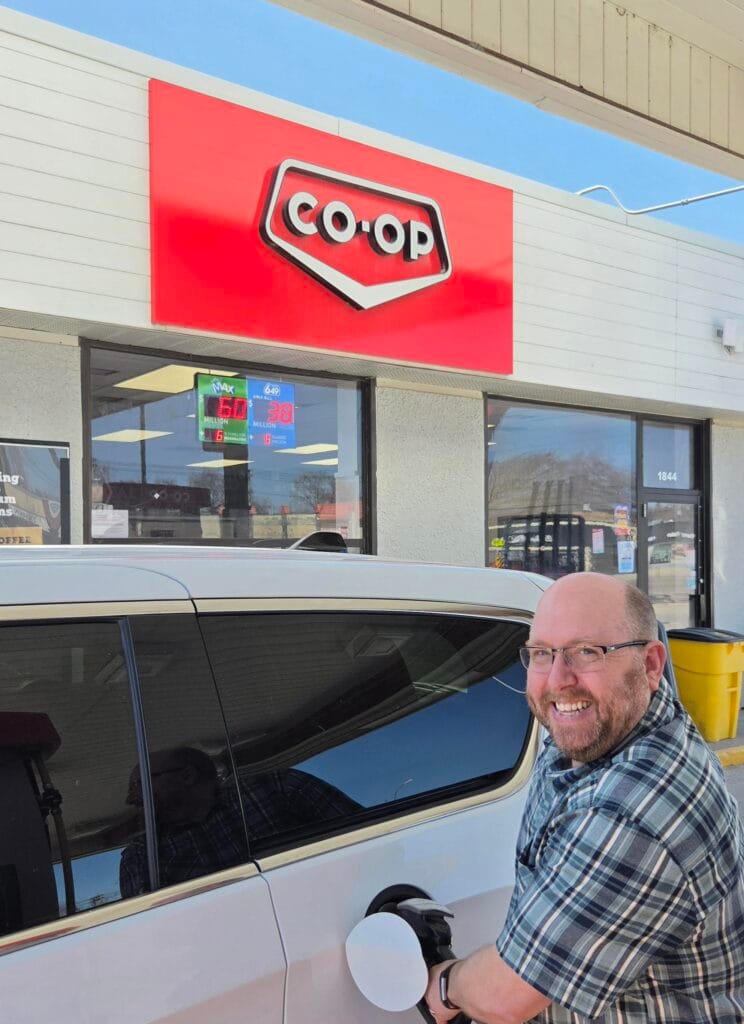
The following day, mindful that rental vehicles must be returned with a full tank, Dan made a quick stop at a Red River Co‑op gas station on Portage Avenue. One of the largest non‑financial co-operatives in Canada, Red River Co‑op operates 70 locations, including food stores, gas bars, cardlocks, convenience stores, and an oil sales centre. It is also a member of the Co‑operative Retailing System.
The co-operative’s service area extends beyond Winnipeg to surrounding communities, reaching as far north as Gimli, approximately one hour away, and east to Dryden, Ontario, located 383 kilometres from the historic Portage and Main intersection.
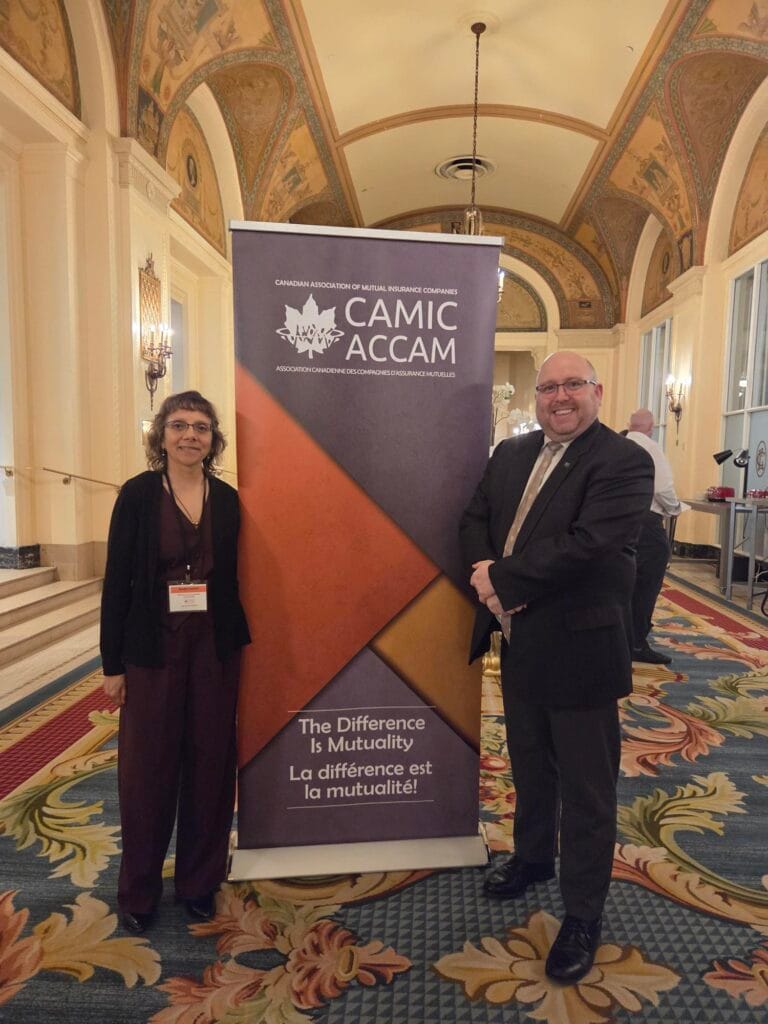
Back in the Gatineau area, Dan then crossed the river and provincial border into Ottawa to join the Canadian Association of Mutual Insurance Companies (CAMIC) for its Lobby Day. The day began with a breakfast alongside parliamentarians and continued with a series of discussions on key industry trends and priorities, including auto theft, fraud prevention, and climate change adaptation and mitigation.
The program also featured insights from Members of Parliament and individuals with first-hand experience in Canada’s trade negotiations. CAMIC serves as the trusted national voice for mutual insurance companies, many of which were established more than a century ago to meet the needs of farm communities that were underserved by foreign insurers.
Dan is pictured here with Sangita Kamblé, CAMIC’s President and CEO.
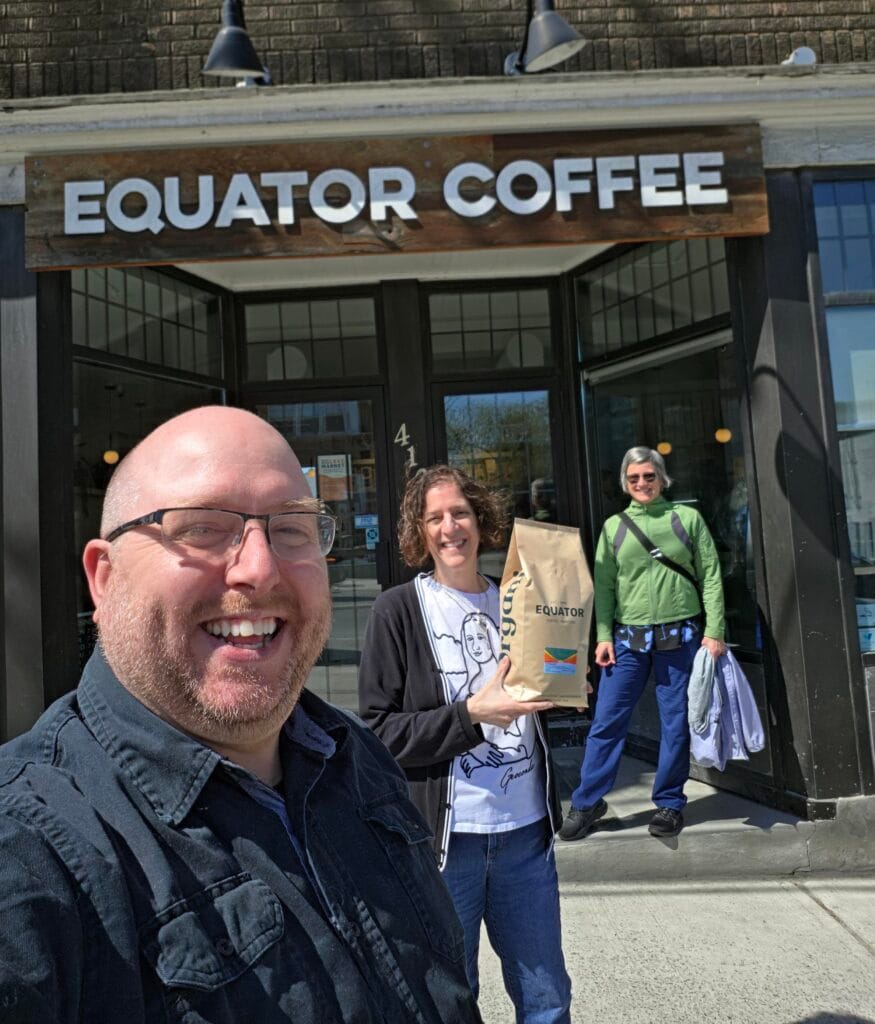
A few days later, Dan had coffee with Carlene Frimer, Principal, Learning and Development Strategies and Support at LearnToast Partners, and Karen Miner of the International Centre for Co‑operative Management and a member of the CMC Board.
The meeting offered a valuable opportunity for in‑depth, informal discussion on a range of co‑operative topics, including the financial co‑operative leadership program, CanadaDE, which will be hosted at Saint Mary’s University this September. Karen and Carlene, alongside Erin Hancock and Tracey Kliesch (Vancity), serve as facilitators for this engaging five‑day immersive program.
CanadaDE is one of seven programs offered globally. While primarily designed for financial co-operatives, it is open to and inclusive of all co-operative professionals. These programs are part of an international certification, I‑CUDE, administered by the Worldwide Foundation for Credit Unions and the World Council of Credit Unions (WOCCU).
The meeting took place at the Equator Coffee location in Westboro, Ottawa. While Equator Coffee is not a co-operative, it sources its fair-trade and organic coffee from Cooperative Coffees, a roaster‑owned green coffee importing co-operative established in the United States in 1999 and the first of its kind.
Cooperative Coffees includes six Canadian roaster members and operates a Montréal office with a quality control lab to support importing activities and member needs. It also manages a fund dedicated to supporting producer partner co-operatives throughout its supply chain.
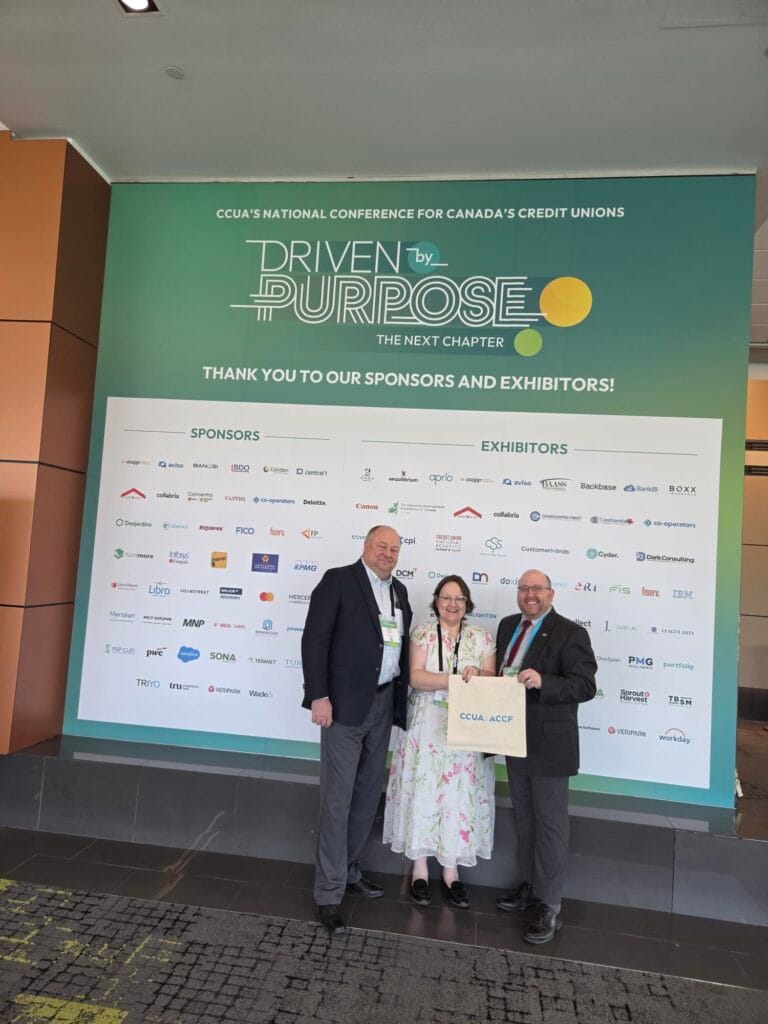
That same week also included the Canadian Credit Union Association (CCUA) conference, held under the theme “Driven by Purpose: The Next Chapter.” This flagship event brings together credit union leaders, innovators, and partners to share ideas and insights that will help shape the future of the sector.
CCUA serves as the national trade association and voice for credit unions and caisses across Canada (excluding Desjardins), with a focus on advocacy, education, strategic initiatives, and sector-wide collaboration. The conference provided an opportunity for Dan to reconnect with, and meet, leaders from credit unions across the country, as well as a range of service providers.
Pictured with Dan are CMC Board Member Martin McInnis, Executive Director of the Co-operative Superannuation Society (CSS) Pension Plan, and Tami Dove, Director, Member Experience at CSS. Established in 1939 in Saskatchewan, CSS is one of the oldest and largest defined contribution pension plans in Canada, with over $5.7 billion in assets. The plan currently serves approximately 300 employers and more than 58,000 current and former employees of co-operatives and credit unions.
CSS Pension Plan is also sponsoring the P6 Hub Space at CMC Congress 2026, where attendees will be able to connect, hold informal meetings, check email, exchange materials, and more.
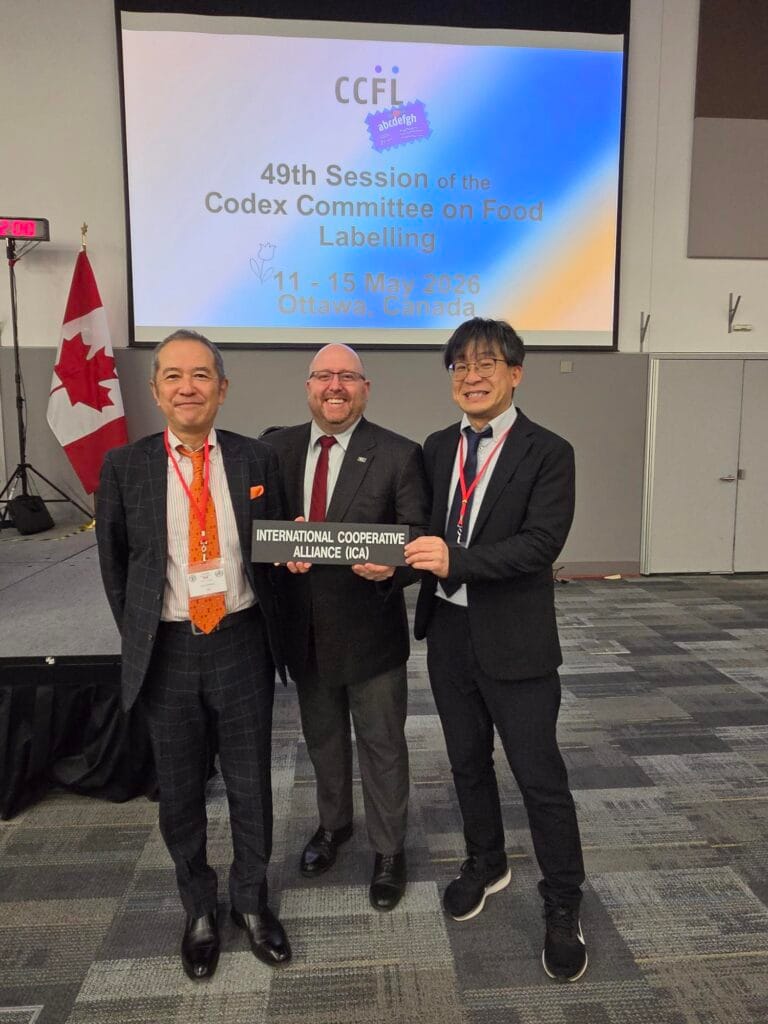
Dan also had the opportunity to connect with Kazuo Onitake, Senior Scientist in the Quality Assurance Division, and Hitoshi Inoue, Operating Officer, Quality Assurance, from the highly regarded Japanese Consumers’ Co-operative Union (JCCU).
They were in Ottawa representing the International Co‑operative Alliance at the 49th Session of the Codex Committee on Food Labelling, which was taking place in the same building.
JCCU brings together more than 300 consumer co-operatives, representing over 31 million members across Japan. The organization develops Co‑op Brand products for nationwide distribution, provides business support services to its members, and advocates for consumer rights while working to strengthen social systems in Japan.
Lastly, following the CCUA Conference, Dan connected with fellow Co-operative Development Foundation of Canada Board member Nigel Mohamed, Vice President, Community Financial Centre at Assiniboine Credit Union. Assiniboine is one of the largest credit unions in Canada and, following recent mergers with Caisse Groupe Financier and Westoba Credit Union Ltd., has become a bilingual institution with assets totalling $9.6 billion and serving 216,000 members across the Winnipeg and Brandon regions.
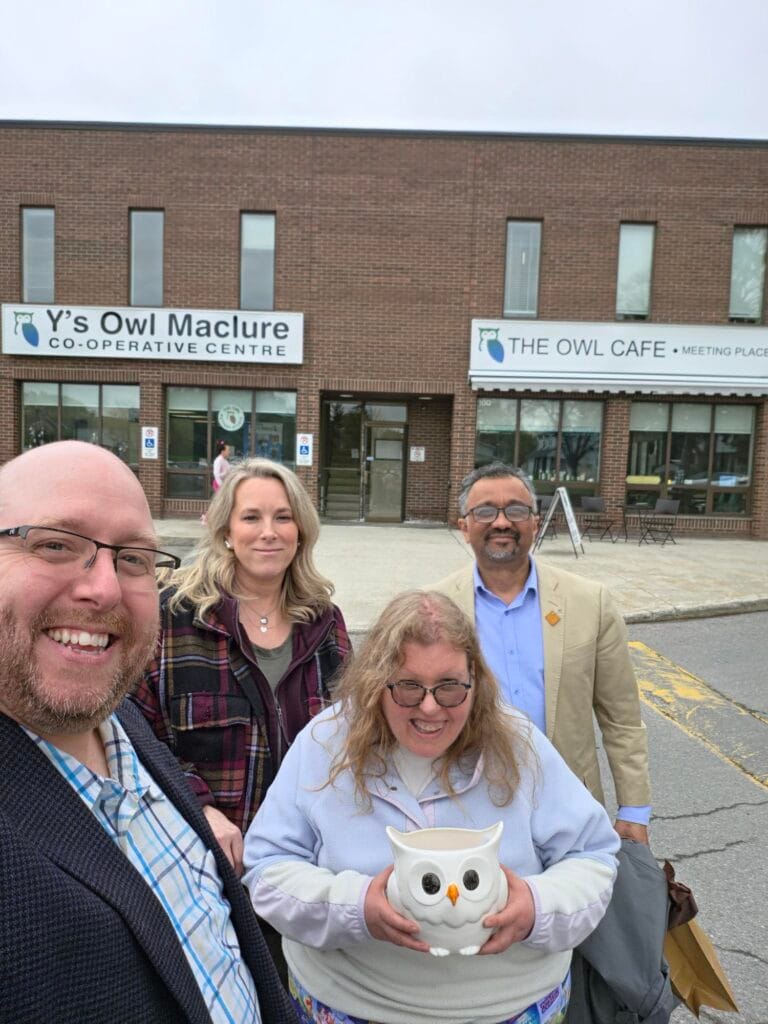
Sharing a mutual interest in advancing social procurement, they continued their conversation over coffee at the Owl Café in Ottawa.
The Owl Café & Meeting Place is a social enterprise operated by Y’s Owl Maclure Co-operative Centre. It provides a range of support and services for individuals with autism and developmental disabilities, while also serving coffee, tea, baked goods, and freshly prepared meals to members of the community.
Pictured with Dan are Sheri Sullivan, Director of Services, and Katie Perry, both of Y’s Owl Maclure Co-operative Centre, alongside Nigel Mohamed.
If you would like to invite Dan to visit your co‑operative, credit union, caisse, or mutual during his travels, please contact him at dbrunette@canada.coop.