

In November, Dan travelled to Alberta to attend the 2026 Alberta Co-ops: Connected by Purpose Conference, organized by the Alberta Community and Co-operatives Association. While in the Edmonton area, he also had the opportunity to connect with several local co-operative organizations and stakeholders.
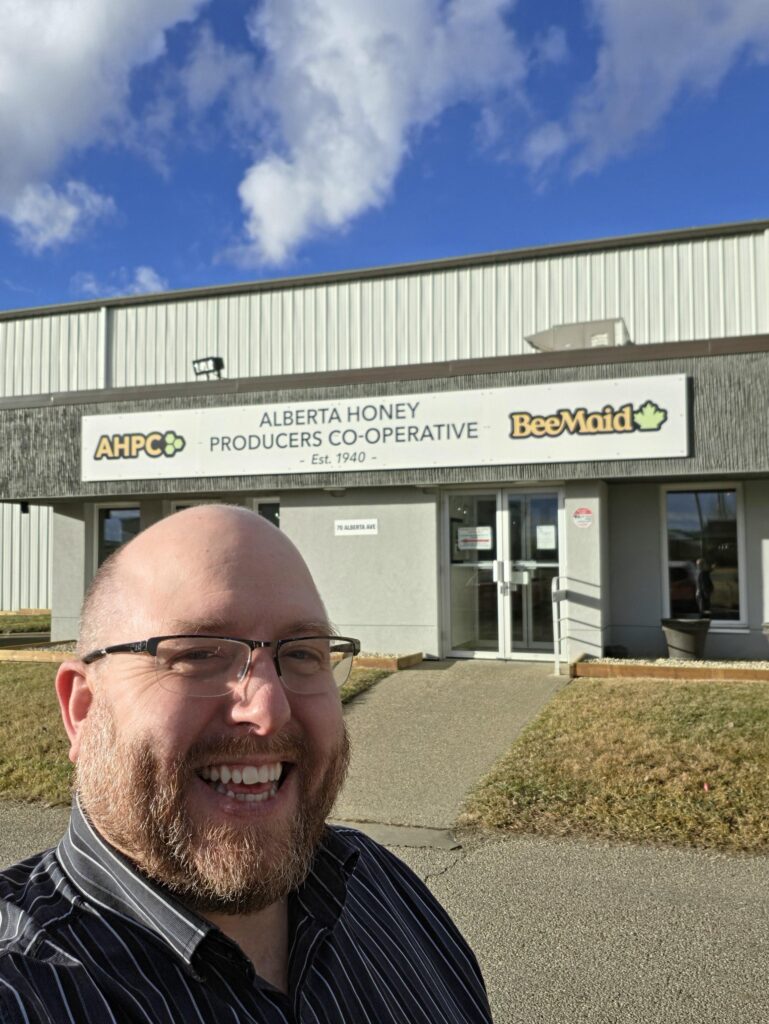
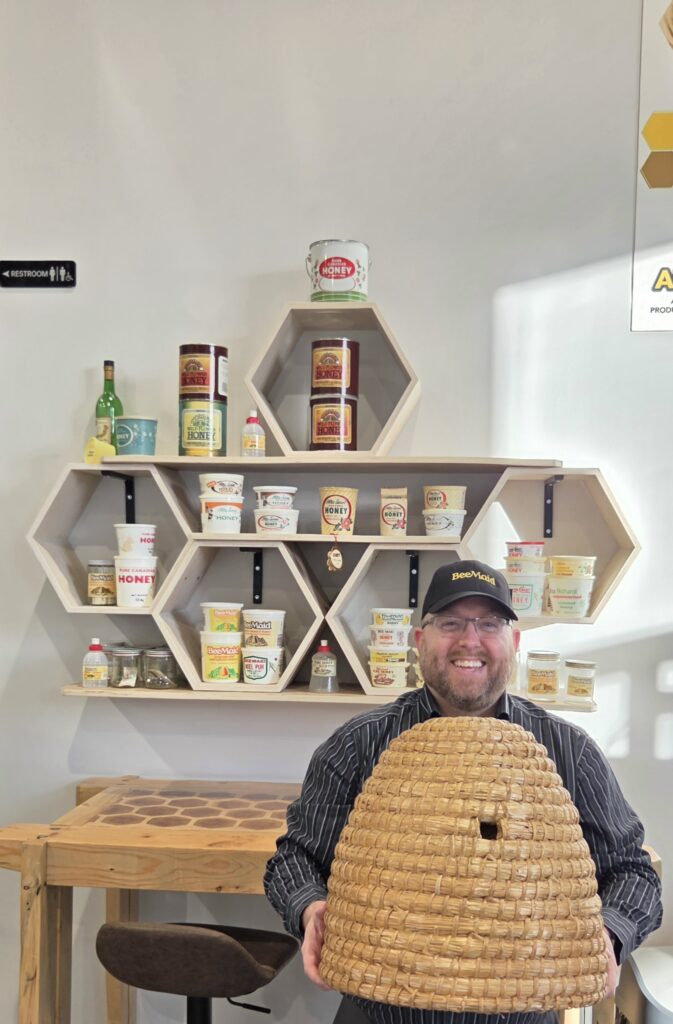
His first visit was with BeeMaid Honey Ltd., the marketing, processing and distribution organization owned by the Manitoba Cooperative Honey Producers (MCHP) and the Alberta Honey Producers Co-operative (AHPC).
BeeMaid demonstrates how Canadian co-operative products can succeed in international markets, including through exports to Asia. Its members also contribute to the broader agricultural economy. The bee colonies that produce BeeMaid honey play an important role in pollinating Canadian crops such as canola, contributing to both crop quality and agricultural production.
The visit also highlighted the prevalence of honey adulteration. This practice can involve adding corn syrup, rice syrup, beet sugar syrup or other inexpensive sweeteners to honey, or marketing these products as honey. BeeMaid’s commitment to using only 100% Canadian honey, with no imported honey, has helped it establish a strong reputation for quality and high production standards.
In addition to its consumer products, BeeMaid provides co-packing services for private-label and co-branded products.
The meeting was followed by a behind-the-scenes tour of the Bee Supplies Store and BeeMaid’s recently expanded facility in Spruce Grove. The facility supports warehousing, packaging and product testing, as well as the on-site production of BeeMaid’s recognizable bear-shaped honey containers.
MCHP and AHPC have a combined membership of more than 325 producers, who collectively own BeeMaid. Their membership also includes beekeepers in British Columbia and Saskatchewan, including members of the Moyen family. Janie Moyen, Communications Officer at Canada Co-op, comes from a Saskatchewan beekeeping family that is part of this network.
These co-operatives also participated in the successful advocacy campaign led by Canada Co-op, then known as Co-operatives and Mutuals Canada, to renew the Tax-deferred co-operative shares program for agricultural co-operatives.
For those attending the Canada Co-op Congress 2027 in Quebec City, one detail may be useful at quiz time: Canadian honey is shipped to markets around the world in blue barrels.

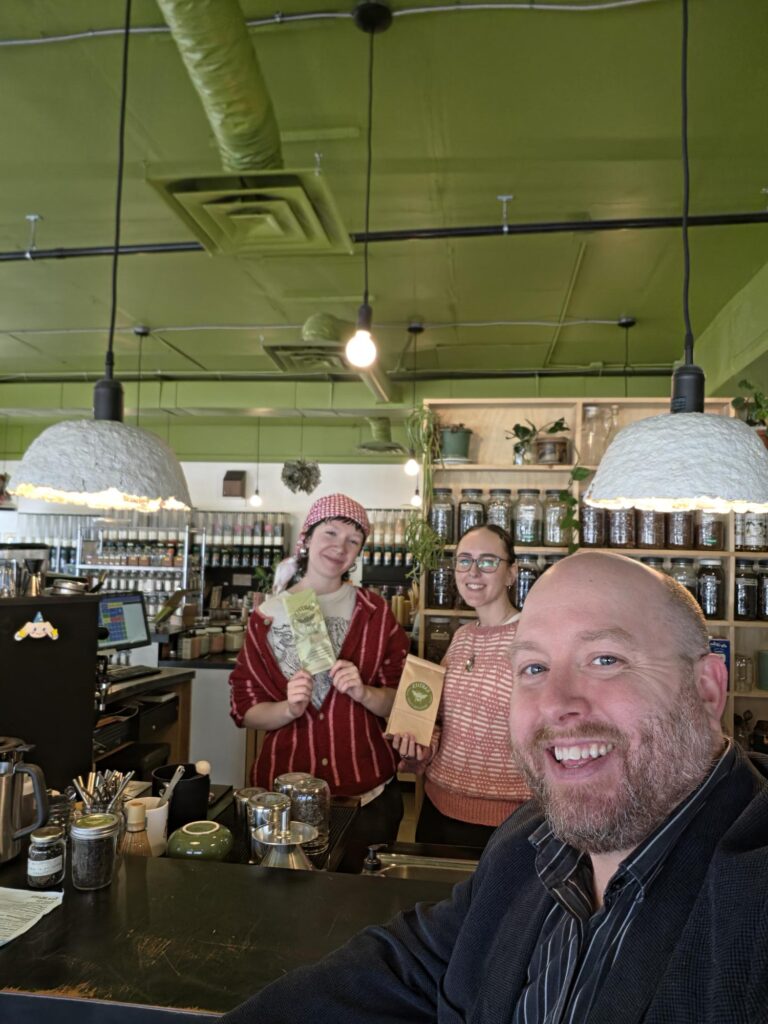
While in Edmonton, Dan also visited Earth’s Refillery Coop, a multi-stakeholder co-operative that combines a bulk food and household goods store with a café and community gathering space. The co-operative recently celebrated its first anniversary.
With a focus on local, fair trade and low-waste products, Earth’s Refillery Coop also provides a space for community engagement. It hosts a range of activities, including speaker series, clothing swaps and other events that bring together people interested in building stronger and more sustainable communities.
The co-operative’s community impact was another notable aspect of the visit. With support from its approximately 1,000 members and contributions from others, the Earth’s Refillery Coop team has provided more than 500 meals, along with numerous coffees, free of charge to people in need.
Located in Edmonton’s McCauley neighbourhood, Earth’s Refillery Coop demonstrates how the co-operative model can bring together commercial activity, community engagement and a commitment to a more equitable, democratic and sustainable economy.
Pictured are worker-owner and founding member Christina Neumann and staff member Emilia Grindlay.
And for anyone planning a visit, the chili bowl comes highly recommended!
The next stop was Homestead Cowork, a coworking space with approximately 11,000 square feet of offices, dedicated and drop-in workstations, boardrooms, common areas and event spaces.
Dan’s interest in the space was its connection to the Homestead Investment Co-operative, which is working to purchase and preserve the heritage building on Jasper Avenue. The property is intended to become the first in a broader portfolio of community investments designed to make local investment more accessible while supporting local businesses and entrepreneurship.
The initiative reflects growing interest in community investment co-operatives, particularly in Western Canada, as a model for mobilizing local capital and creating opportunities for community ownership.
During his visit, Dan toured the coworking space, which can also be explored through this virtual tour, and had the opportunity to connect with Chris Gagnon.


The day concluded with an opportunity for Dan to connect with Edmonton-based Yousra Kabbani, Manager, Finance and Administration at Canada Co-op. Since joining Canada Co-op in 2024, Yousra has worked with members and partners across the co-operative sector through her finance and administrative responsibilities.
Canada Co-op is pleased to have Yousra as a valued member of its team.
The following day, before conference activities began, Dan visited the Las Americas Housing Co-operative Ltd., a 35-townhouse community established in 1983.
Las Americas is one of 25 co-operatives established across Canada by members of Latin American communities, many of which were created by and for people who had fled dictatorships in their countries of origin.
Las Americas illustrates how the co-operative model can address housing needs while also supporting the economic, cultural and social well-being of individuals and communities.


The next stop was the Federation Building, home to the Alberta Federation of Rural Electrification Associations (AFREA), the Federation of Alberta Gas Co-ops Ltd. (FedGas) and the Alberta Federation of Rural Water Co-operatives (Water Federation). Together, these co-operative networks represent organizations that provide essential electricity, natural gas and water services to rural communities across Alberta.
During the visit, Dan delivered copies of Canada Co-op’s Power the Economy: Canada’s Co-operative Advantage report to the leadership of the three associations and met with Steven Young, CEO of AFREA.
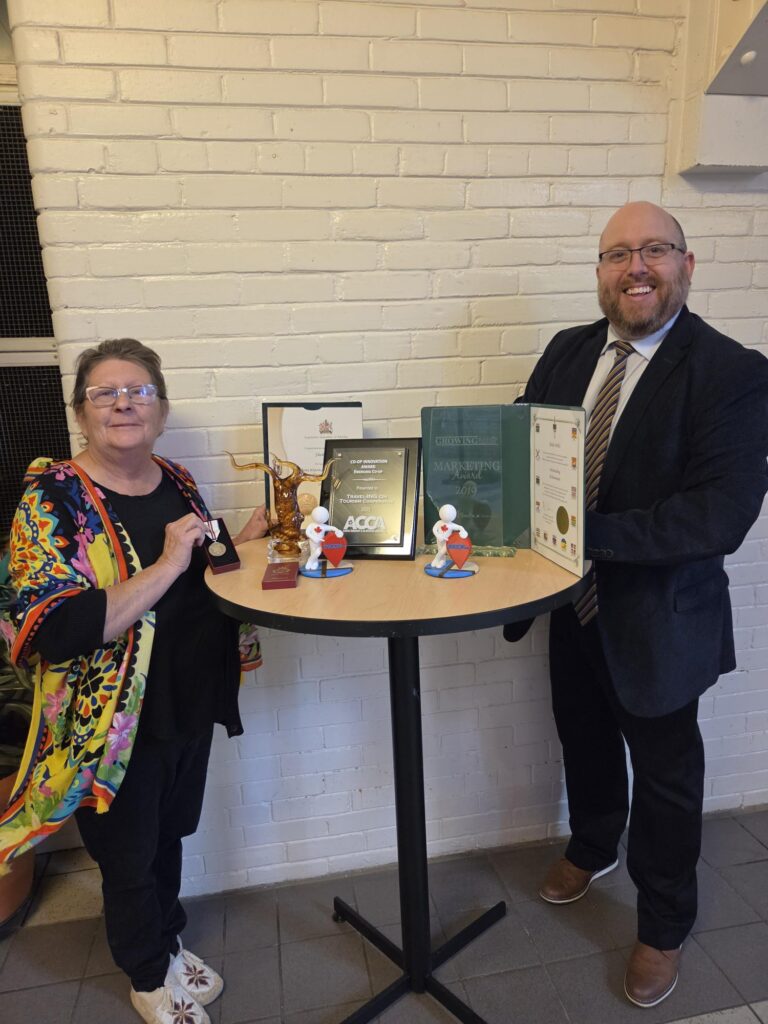
While reviewing co-operatives and events in the Edmonton area, Dan had the opportunity to attend an event hosted by Travel-ING On Tourism Cooperative, a federally incorporated co-operative that connects communities and organizations in the travel, tourism and heritage sectors to help enhance visitor experiences.
The event included the announcement of the upcoming launch of the Travel INGON App, which will soon be available through the App Store and Google Play.
Developed using the co-operative model, the app is designed to increase the visibility of local attractions and businesses and provide an alternative to relying exclusively on major search platforms, where smaller communities and businesses with limited marketing resources can face challenges in gaining visibility.
The project received the 2025 ACCA Co-op Innovation Award, as well as funding through the Co-operators Co-operative Development Program.
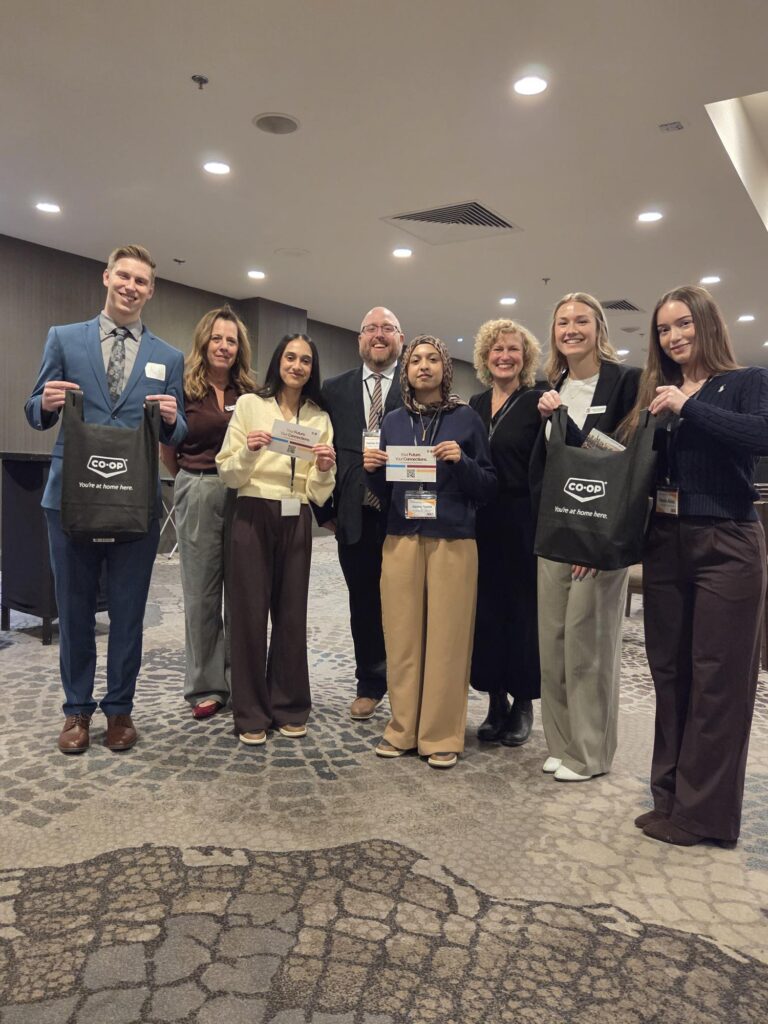
Conference activities began with a youth networking event presented by Business NOT As Usual and the Alberta Community & Co-operative Association (ACCA). The event brought together high school and university students interested in the co-operative model with representatives and leaders from across the sector.
Participants had the opportunity to learn more about the co-operative business model, explore career opportunities and connect directly with people working in organizations that prioritize people and communities.
Dan is pictured with several participants, along with Corinne Remple, Executive Director of ACCA; Natalie Kallio, Professional Research Associate with the Canadian Centre for the Study of Co-operatives; and Rebecca Haberstock-McNight, Project Lead for Business NOT As Usual at ACCA.
The youth networking event was followed by a reception with Members of the Legislative Assembly (MLAs), building on ACCA’s “Storm the Legislature” event earlier that day, during which Alberta’s co-operative sector was recognized in the Legislative Assembly.
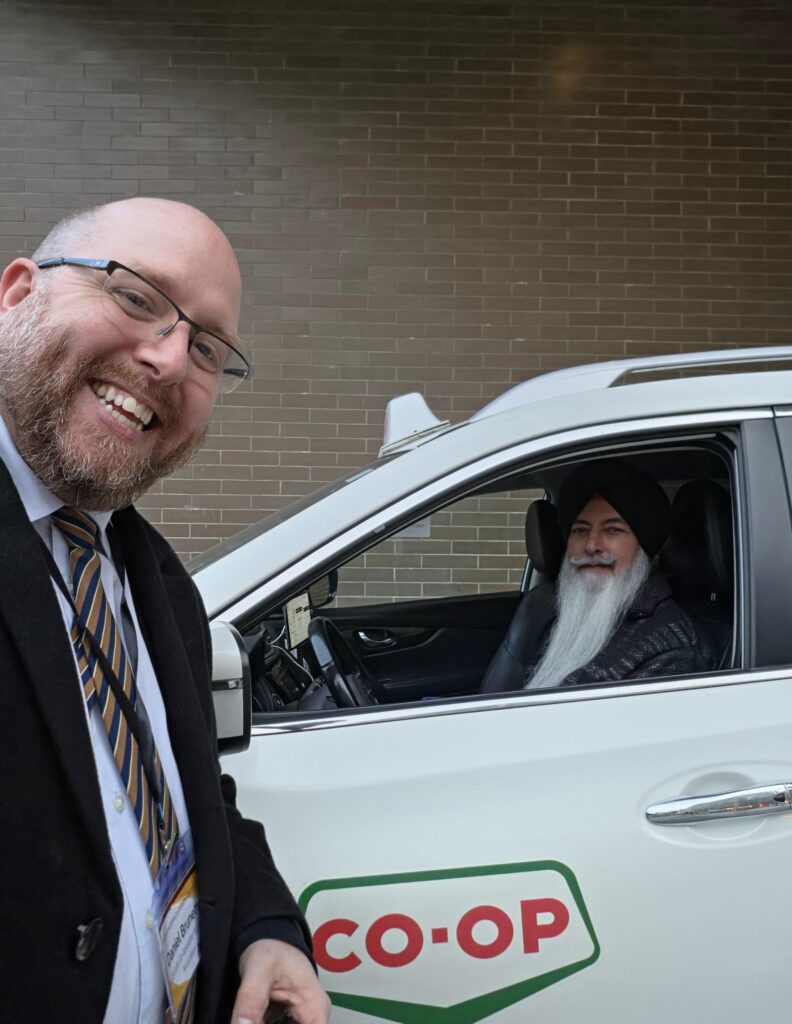
On his way to the reception, Dan noticed the familiar CO-OP name on a vehicle and took the opportunity to learn more about the Alberta Co-operative Taxi Line Ltd., established in 1971. The co-operative now operates 560 vehicles, works with 1,200 drivers and provides more than four million rides annually.
It is one of more than 24 registered taxi co-operatives across Canada, in addition to a similar number of rideshare and car-share co-operatives, as well as a limousine co-operative.
Over the years, Alberta Co-operative Taxi Line has expanded beyond traditional taxi services to include transportation for seniors and students, battery boosting and parcel delivery, including food and corporate packages.

The main conference program took place on November 18, with sessions addressing topics including youth engagement, energy, co-operative values as a strategic advantage, and government relations.
A highlight of the program was the Student Finalist Presentations for the pan-Canadian Co-op Futures Challenge. Dan served as a judge alongside Tami Dove, Director, Member Experience at CSS Pension Plan; Kyle White, Director of Education at Co-operatives First; and Natalie Kallio, Research Associate at the Canadian Centre for the Study of Co-operatives.
The three finalist teams were asked to address an important question for the sector: “Why aren’t co-operatives a mainstream business model in Canada, and how can we change that?”
The winning team, Co-op Next, was composed of Harleen Brar (University of Alberta), Hana Alisic (MacEwan University) and Alesha Shahid (Athabasca University). Their proposal focused on increasing awareness of the co-operative model within business-related academic programs and promoting business conversions to co-operative ownership as a succession option for retiring business owners.
The two other finalist teams also presented thoughtful and well-developed proposals. The Axiom Arc Initiative included Daphne Hong and Jun Chao of the University of Calgary, and Kevin Wang of the University of Toronto.
The Future of Business Is Built Together team included David Yap, Bao Ngoc Nguyen and Kyle Pon of the University of British Columbia.
The quality of the presentations demonstrated strong interest among emerging leaders in the future of the co-operative model. Dan looks forward to seeing how these participants remain engaged with the co-operative sector in the years ahead, whether as employees, members, entrepreneurs or board directors.
Photo credit: Natalie Kallio
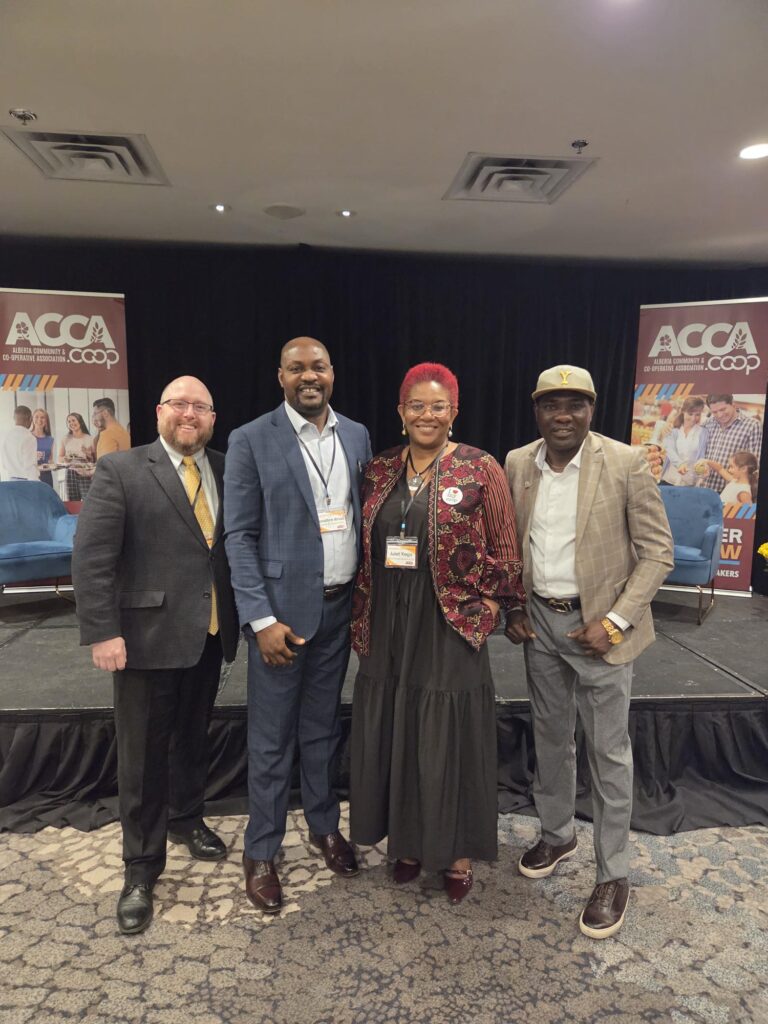
The conference also provided opportunities for networking and meetings outside the formal program. One of these brought Dan together with representatives of the newly established Canadian Black Co-operative Network (CBCN). Members of the network met in conjunction with the Canada Co-op Congress 2026 in Toronto and are planning to meet again as part of a pre-Congress event in Quebec City in 2027.
CBCN President Jonathan Amao is pictured with Dan to his right, and Juliet ‘Kego’ Ume-Onyido and Tope Alabi to his left.
Juliet is a leader, speaker and poet active in the co-operative sector and co-founder of the Whole Woman Network Worker Co-operative (WWN Co-op). Federally incorporated in 2024, WWN Co-op works with women and youth, particularly those from Black, Indigenous and other racialized communities, to support greater social and economic independence.
Jonathan and Tope are also involved with Wisdominds Co-operative Canada, a multi-stakeholder co-operative that was federally incorporated in 2024. Jonathan serves as Founder and President, while Tope serves as Alberta Coordinator.
Wisdominds brings together professionals, consumers, producers, workers and community members to address shared needs and challenges. Its activities include community engagement, resource sharing, skills development and support for community-focused enterprise development.

Following the Alberta Co-operatives Conference, Dan met with Dr. Martin Boucher, Research Chair in Sustainability at NorQuest College, for a discussion on renewable energy and the co-operative sector. Their conversation focused on the challenges and opportunities associated with renewable energy development in Canada.
Martin shared perspectives from his work as a researcher and as Chair of the Board of Community Energy Co-operative Canada (CECC), which represents and supports co-operatives active in the community energy sector.
Since holding its inaugural summit in 2023, CECC has worked to increase awareness of the community energy model, bring together sector leaders and advocate for the development of community-owned energy projects across Canada.
On his final day in Alberta, Dan made several additional co-operative-related stops before heading to the airport. The first was the Feeder Associations of Alberta Limited (FAA), the provincial organization supporting 45 Local Feeder Associations established under Alberta’s Co-operatives Act and regulations.
With a history dating back to 1936, FAA supports farmers and livestock producers through programs that include loan guarantees, cash advances and financing to help producers expand their herds. It works in partnership with government agencies, financial institutions and Local Feeder Associations to serve producers in Alberta and neighbouring Saskatchewan.


Dan’s next stop was the Leduc Food Store, one of 14 locations operated by Leduc Co-operative Ltd. The co-operative serves communities from Beaumont to Drayton Valley through a network that includes gas bars, cardlock fuel locations, two agro centres, a pharmacy and a food store.
Leduc Co-operative is one of approximately 150 independent co-operatives that work together through the Co-operative Retailing System, giving the recognizable CO-OP® brand a significant presence across Western Canada.
Nearby, the words FARMER OWNED CO-OPERATIVE, painted prominently on the side of a heritage building, caught Dan’s attention.
The Alberta Wheat Pool Grain Elevator Site Complex, now a designated heritage site and museum, preserves an important example of the wooden grain elevators that once characterized communities across the Prairies before concrete and steel construction became more common.
The site, which includes the grain elevator, attached office and warehouses, reflects the vernacular industrial architecture associated with the Prairie grain industry. It also preserves an important part of Alberta’s agricultural and co-operative history and recognizes the role that co-operation has played in rural communities across the province.

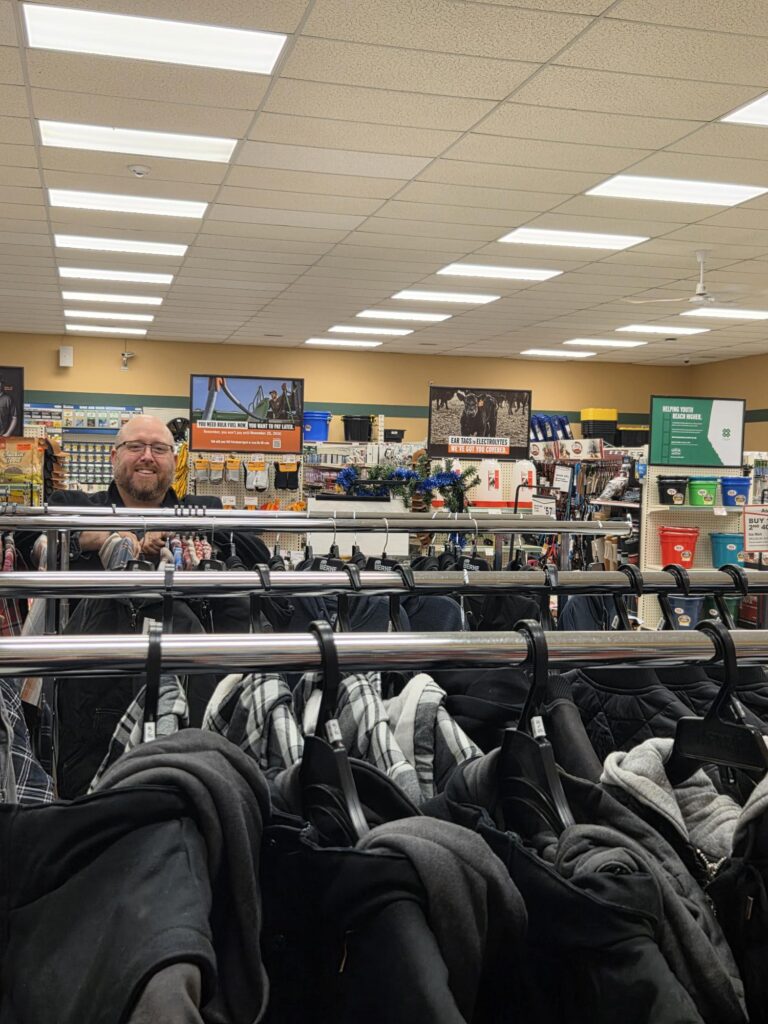
Dan’s final stop was at a United Farmers of Alberta Co-operative Ltd. (UFA) location. With roots dating back to 1909, UFA has grown to become Canada’s fifth-largest non-financial co-operative.
UFA’s more than 120,000 members are served through a network that includes 34 Farm & Ranch Supply stores, 121 petroleum agencies and cardlock locations, and six fertilizer plants across 118 communities. While the majority of its operations are in Alberta, UFA also has a presence in British Columbia, Saskatchewan, Manitoba and Ontario.
This year, UFA returned $36.6 million to its members and was recognized as one of Alberta’s top employers for the 14th consecutive year. The co-operative also supports a range of community initiatives, including 4-H clubs and capital projects that contribute to community infrastructure and services.
If you would like to invite Dan to visit your co‑operative, credit union, caisse, or mutual during his travels, please contact him at dbrunette@canada.coop.