

Canada feels unsteady right now.
Housing costs are high. Economic pressure is constant. And many of the institutions that once promised predictability no longer feel as reliable as they used to.
To better understand what Canadians are experiencing — and what they’re looking for next — Co‑operatives and Mutuals Canada (CMC) and CHF Canada partnered with Abacus Data on new national research. The study asked a simple but urgent question:
What does stability mean to Canadians today — and who do they trust to deliver it?
The answers are clear — and they’re grounded in data.
Key Finding #1: Many Canadians feel they’re losing control over their lives.
Nearly half of Canadians say life feels more unpredictable than it used to.
That feeling shows up in very real ways — anxiety about paying bills, securing housing, and whether institutions are acting in people’s best interests.
Key Finding #2: Canadians want stability, not disruption.
Canadians aren’t asking for constant change.
Ninety percent say essentials like housing and good jobs feel harder to secure than they used to, and 86% say the systems they rely on feel less stable.
Key Finding #3: Canadians want more co‑operatives — and want in.
Support for the co‑operative model is strong and active.
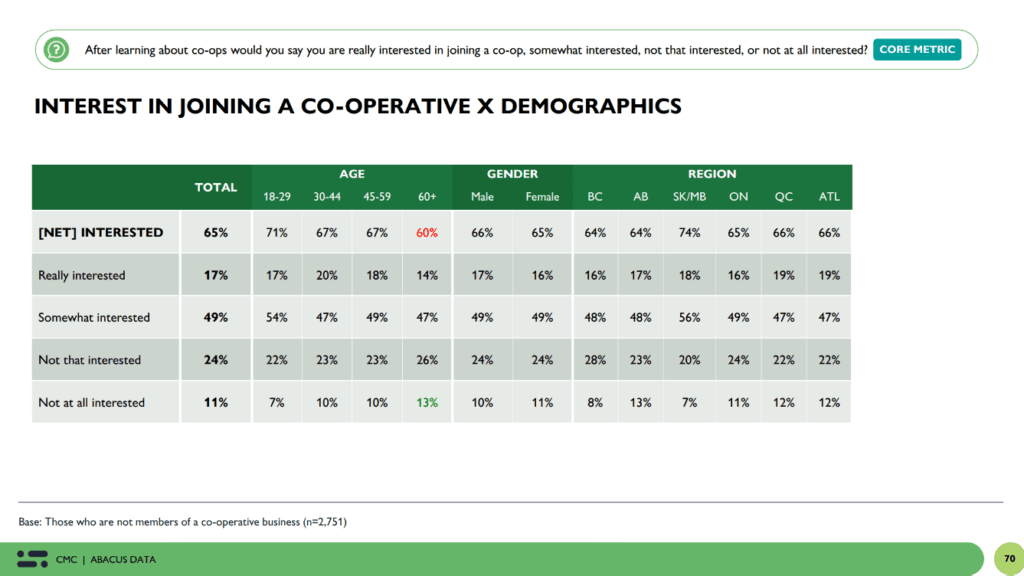
Seventy‑one percent of Canadians want to see more co-operatives, credit unions, caisses and mutuals operating in Canada, and when current members are combined with those interested in joining, roughly 70% of Canadians are already part of — or open to — the co‑operative model.
Taken together, the research points to something bigger: at a time when life feels harder to control, Canadians are gravitating toward institutions rooted in shared responsibility, community stability, and long‑term commitment. That’s exactly what co‑operatives are built to deliver.
Here’s the research in more detail:
Key Finding #1: Many Canadians feel they’re losing control
Nearly half of Canadians say life feels more unpredictable than it used to. That sense of uncertainty cuts across income levels, regions, and age groups, and reflects deeper concerns about affordability, housing, and trust in institutions.
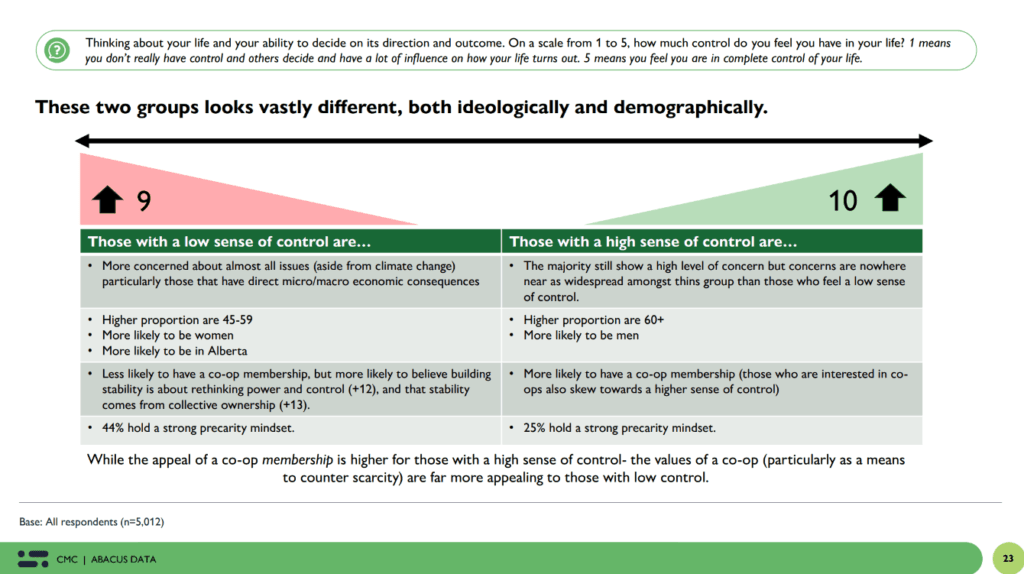
The research shows Canadians increasingly split between those who feel firmly in control of their lives and those who feel they have very little influence over the systems shaping their future. When people feel powerless, trust erodes — and stability becomes harder to find.
This is where co‑operatives matter.
Co‑operatives are built to return control to people — through democratic governance, shared ownership, and a model that prioritizes member needs over short‑term profit. In an era defined by precarity, that sense of agency matters.
Key Finding #2: Canadians want stability — not disruption
The data is clear: Canadians today aren’t looking for upheaval. They’re looking for stability they can rely on.
- 90% say essentials like housing, healthcare, and good jobs feel harder to secure than they used to
- 86% say the systems and institutions they rely on feel less stable
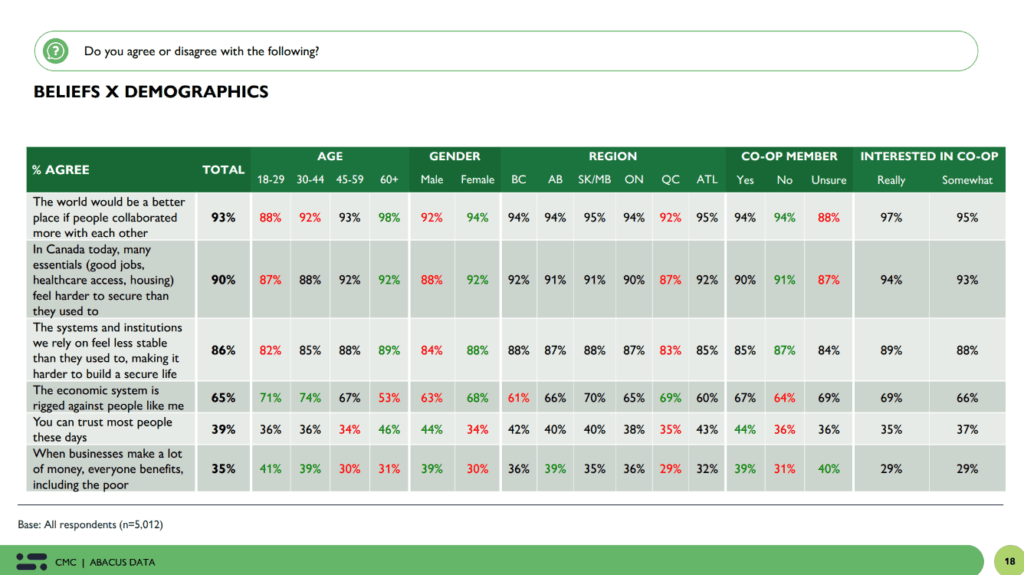
When asked about co‑operatives, Canadians consistently associate them with resilience and reliability:
- 83% say co‑operatives help stabilize communities during economic ups and downs
- 83% believe co‑operatives are more likely to survive tough times
- 81% see co‑operatives as part of the solution to affordability and inequality
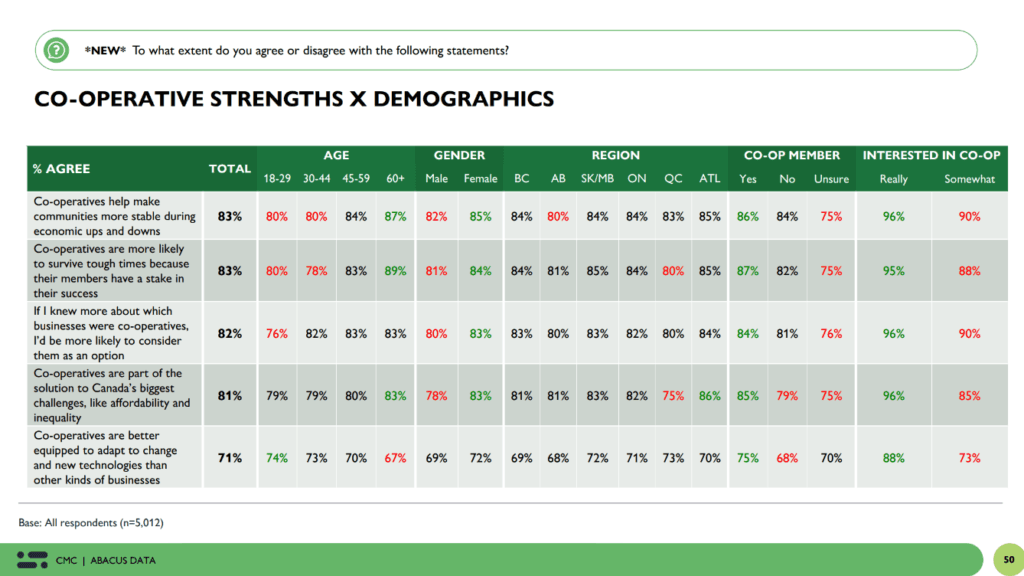
This is why co‑operatives stand out.
In a moment marked by uncertainty, co‑operatives offer something Canadians are actively seeking: institutions designed to endure — not just react.
Key Finding #3: Canadians want more co‑operatives — and want in
Support for co‑operatives isn’t passive. Canadians aren’t just saying they like the idea — they want to participate.
- About one‑third of Canadians are already members of a co‑operative
- Another one‑third say they’re interested in joining one
- 71% want to see more co‑operatives operating across Canada
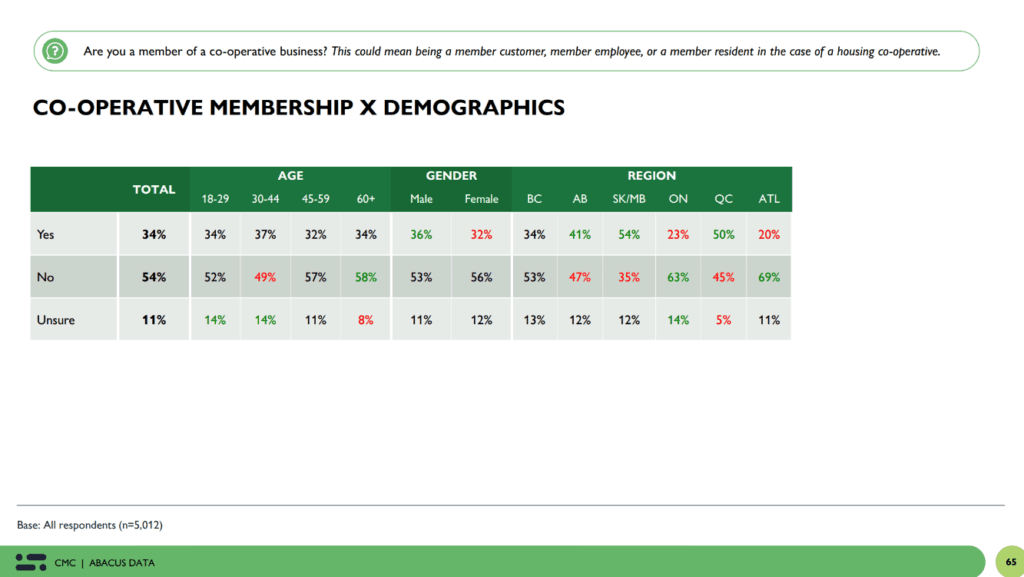
Taken together, roughly 70% of Canadians are already part of — or open to — the co‑operative model.
That’s not theoretical support.
It’s a signal that Canadians see co‑operatives as a credible, practical path forward — especially at a time when trust in other institutions is under strain.
Why this moment matters
Beyond individual data points, the research reveals what Canadians believe creates real stability:
- 92% say stability comes from having a secure home in a strong community
- 84% say it comes from shared ownership and collective decision‑making
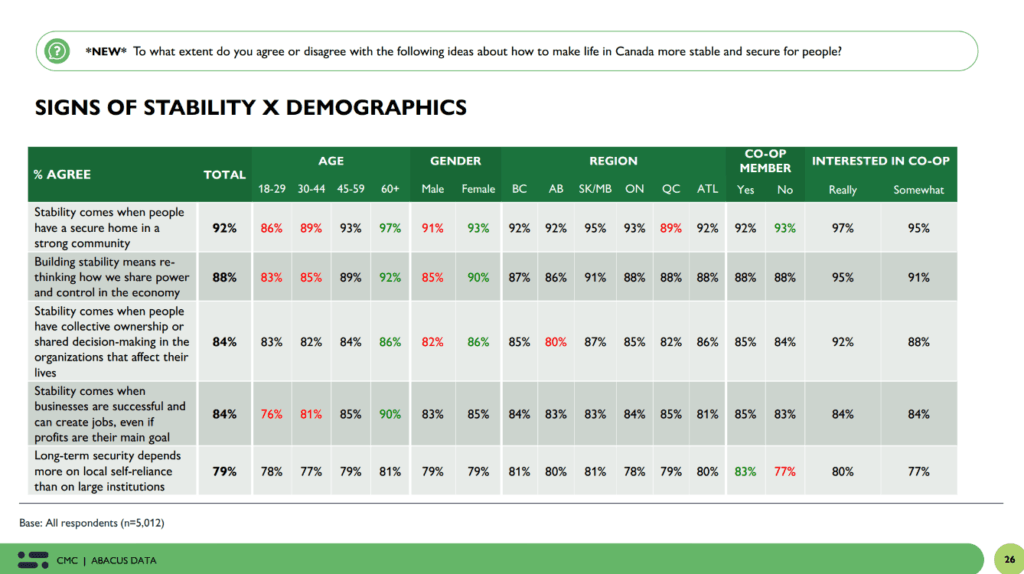
At a time when life feels harder to control, institutions rooted in shared responsibility and long‑term commitment resonate — not because they promise quick fixes, but because they offer durability.
Interested in learning more? 👉 Explore the national research summary: Canadian public opinion research 2025 – summary report
What we heard at the national webinar
On March 25, CMC, CHF Canada, and Abacus Data brought these findings into a national conversation through the webinar Canadians Want Stability — Co‑operatives Deliver It.
The discussion went beyond the numbers, exploring what the research means in practice — for housing, for communities, and for decisions being made right now. Participants heard directly from sector leaders and the lead researcher from Abacus Data, and engaged with questions such as:
- What Canadians really think about co‑operatives today
- Why trust in the co‑operative model remains resilient amid uncertainty
- What this research signals for future leadership, policy, and action
The takeaway was clear: this research isn’t just descriptive — it’s directional. It offers insight that can inform strategy, advocacy, and leadership decisions.
Want more information? Contact jmoyen@canada.coop